Spread the love

A small bedroom can be a masterclass in restraint, creativity, and cozy luxury. When space is limited, every choice matters: scale, storage, color, and light must work together to create a room that feels calm, stylish, and surprisingly spacious. Below are t 21 stylish, Pinterest‑friendly ideas, each presented as a clear design direction with practical steps, styling tips, and small DIY suggestions so you can transform a compact bedroom into a beautiful, functional retreat. Pin the ideas you love and adapt them to your layout, budget, and personality.
Introduction

Small bedrooms are an opportunity, not a limitation. With thoughtful planning you can create a space that feels layered, intentional, and restful. The secret is to combine smart storage, scaled furniture, clever lighting, and a cohesive color story. These ten ideas focus on maximizing function while delivering high‑impact style—perfect for renters, tiny‑home dwellers, or anyone wanting a serene, well‑designed sleep space.

1. Built‑In Bed Nook

A built‑in bed nook turns wasted wall space into a cozy, custom sleeping alcove. Framing the bed with built‑in shelving, a shallow headboard ledge, and integrated lighting creates a sense of enclosure that feels both protective and luxurious.

How to do it

  • Build shallow recessed shelves on either side of the bed for books and bedside essentials.
  • Add a slim floating headboard with a soft cushion panel for comfort.
  • Install recessed LED strips or wall‑mounted reading lights to free up surface space.

Styling tips

  • Paint the nook a slightly darker tone than the rest of the room to create depth.
  • Use matching baskets on lower shelves to hide clutter.
  • Add a textured throw and layered pillows to make the nook feel inviting.
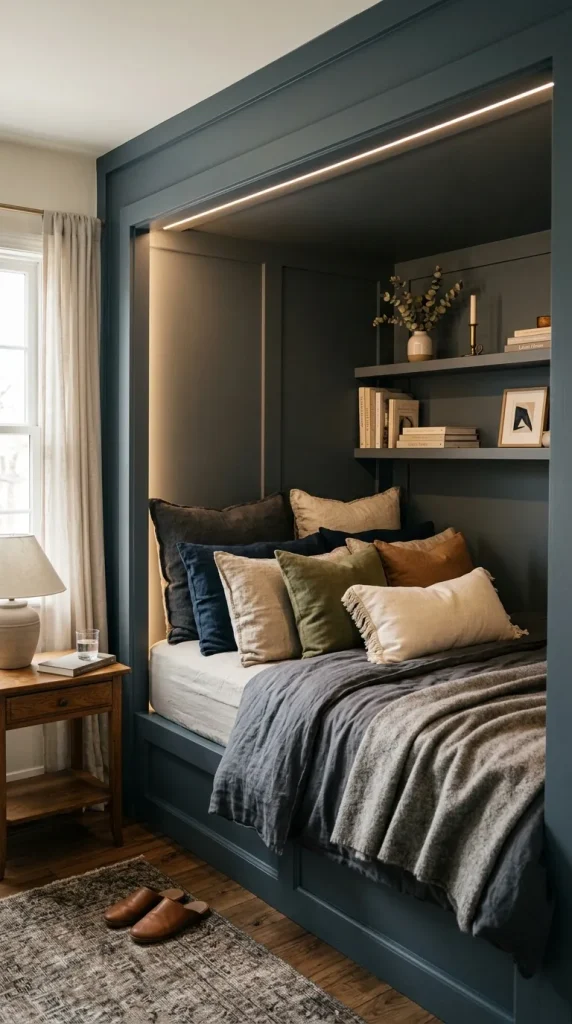
Why it works The built‑in approach reduces the need for bulky furniture and creates a tailored, high‑end look that maximizes every inch.

2. Lofted Storage Bed

Elevating the bed slightly and incorporating storage underneath is a game‑changer for tiny bedrooms. A lofted platform with drawers or open cubbies gives you a full closet’s worth of storage without sacrificing floor space.

How to do it

  • Build a platform bed with deep drawers or cubby compartments beneath.
  • Use the underside for seasonal clothing, shoes, or extra bedding.
  • Keep the platform height low enough to maintain a comfortable ceiling clearance.

Styling tips

  • Use uniform drawer fronts or woven baskets for a clean, cohesive look.
  • Add a slim bedside shelf or wall sconce to avoid bulky nightstands.
  • Choose a platform finish that complements your flooring for visual continuity.

Why it works Under‑bed storage turns dead space into practical capacity, reducing the need for additional furniture.

3. Fold‑Down Desk and Nightstand Combo

A fold‑down desk that doubles as a nightstand is perfect for multi‑use rooms. During the day it functions as a workspace; at night it tucks away, leaving the room uncluttered and restful.

How to do it

  • Install a wall‑mounted fold‑down desk at bedside height with a small shelf above.
  • Use a slim foldable chair or a tucked‑away stool that slides under the bed.
  • Add a cable management solution to keep electronics hidden when closed.

Styling tips

  • Paint the desk the same color as the wall for a seamless, built‑in look.
  • Use a decorative tray on the desk surface to corral essentials when it’s folded down.
  • Choose a desk surface in a warm wood tone to add texture and warmth.

Why it works This dual‑purpose solution keeps the room flexible and clutter‑free while supporting modern living needs.

4. Vertical Gallery Wall with Narrow Shelves

A vertical gallery wall draws the eye upward and creates the illusion of height. Combine slim picture ledges with a few framed prints and a tall mirror to make the room feel taller and more curated.

How to do it

  • Install narrow floating shelves vertically rather than horizontally.
  • Mix framed photos, small plants, and a couple of sculptural objects.
  • Add a tall, narrow mirror at one end to reflect light and expand sightlines.

Styling tips

  • Keep frames in a consistent finish (black, white, or natural wood) for cohesion.
  • Use odd numbers of objects on each shelf for a balanced, editorial look.
  • Rotate artwork seasonally to keep the display fresh.

Why it works Vertical arrangements emphasize height and create a gallery‑like focal point without taking up floor space.

5. Monochrome Minimalism with a Textured Accent

A restrained monochrome palette makes a small room feel calm and cohesive. Add one textured accent—like a woven headboard, a boucle throw, or a patterned rug—to create depth without visual clutter.

How to do it

  • Choose a base color (soft gray, warm beige, or muted blue) and use it across walls, bedding, and furniture.
  • Introduce texture through textiles and finishes rather than additional colors.
  • Keep trim and ceilings a crisp white to maximize perceived height.

Styling tips

  • Layer different textures—linen, wool, rattan—to keep the palette interesting.
  • Use matte finishes on large surfaces and a single metallic accent (brass or black) for contrast.
  • Keep bedside surfaces minimal: a lamp, a book, and a small vase.

Why it works Monochrome simplifies the visual field, making the room feel larger while texture adds tactile richness.

6. Pocket Door and Recessed Storage

Swapping a swinging door for a pocket door instantly frees up floor space. Pair this with recessed niches and built‑in closets to create a streamlined, efficient layout.

How to do it

  • Replace the bedroom door with a pocket or sliding door to reclaim wall space.
  • Add recessed niches in the wall for display or storage.
  • Use shallow built‑in wardrobes with sliding doors to maximize storage without intrusion.

Styling tips

  • Paint the pocket door in a contrasting color to make it a subtle design feature.
  • Use recessed lighting in niches to highlight decorative objects.
  • Keep wardrobe fronts simple and handleless for a sleek look.

Why it works Pocket doors and recessed storage reduce visual clutter and make circulation easier in tight layouts.

7. Daybed with Built‑In Storage and Seating

A daybed is a versatile piece that functions as seating by day and a bed by night. Choose a model with built‑in drawers or a trundle to maximize sleeping and storage options.

How to do it

  • Place a daybed along a long wall to create a lounge area that doubles as a guest bed.
  • Use under‑bed drawers for linens and seasonal items.
  • Add a few large cushions and a throw to make it feel like a sofa.

Styling tips

  • Use a fitted mattress and crisp bedding to keep the look tidy.
  • Add a small side table or wall‑mounted shelf for a lamp and a cup of tea.
  • Layer rugs to define the seating area and add warmth.

Why it works Daybeds create flexible living arrangements in small bedrooms, especially in studio apartments or guest rooms.

8. Mirrored Wardrobe Doors and Light‑Reflecting Surfaces

Mirrors are the classic small‑space trick. Mirrored wardrobe doors, glossy finishes, and reflective accents bounce light and visually double the room.

How to do it

  • Install full‑height mirrored sliding doors on wardrobes to reflect the room and light.
  • Use glossy tiles or lacquered surfaces sparingly to amplify brightness.
  • Place a mirror opposite a window to maximize natural light reflection.

Styling tips

  • Keep mirror frames minimal to avoid visual heaviness.
  • Use mirrored surfaces alongside warm textures (wood, textiles) to prevent a cold feel.
  • Clean mirrors regularly to maintain clarity and sparkle.

Why it works Reflections expand sightlines and make compact rooms feel airier and more open.

9. Fold‑Away Murphy Bed with Stylish Facade

A modern Murphy bed can be a design statement when its facade is treated like furniture. Choose a front with built‑in shelving, a desk, or decorative paneling to make the bed disappear in plain sight.

How to do it

  • Select a Murphy bed with integrated storage or a fold‑down desk.
  • Customize the facade with paint, wallpaper, or wood veneer to match your decor.
  • Ensure the mechanism is high quality for smooth operation and safety.

Styling tips

  • Use the facade as a gallery wall when the bed is folded up—add framed art or a decorative mirror.
  • Keep bedding neutral so the bed blends when folded down.
  • Add a slim rug in front to anchor the area and soften the floor.

Why it works Murphy beds free up daytime floor space while offering a comfortable sleeping solution at night.

10. Pocket‑Sized Luxury: Spa‑Inspired Details

Small bedrooms can feel luxurious with a few spa‑inspired touches: plush textiles, layered lighting, and a curated scent. Focus on quality over quantity to create a restful, hotel‑like atmosphere.

How to do it

  • Invest in high‑quality bedding with a high thread count and a soft duvet.
  • Add layered lighting: bedside sconces, a dimmable overhead, and a small lamp for reading.
  • Introduce a signature scent with a diffuser or candle and a small vase of fresh flowers.

Styling tips

  • Use a small upholstered headboard to add softness and comfort.
  • Keep surfaces minimal and choose a few beautiful objects rather than many small items.
  • Add a textured throw and a couple of accent pillows for tactile luxury.

Why it works Small, thoughtful upgrades create a sense of indulgence without requiring more space.

Practical Styling and Maintenance Tips

  • Measure first: Always measure door swings, clearances, and furniture dimensions before buying.
  • Scale down: Choose furniture with slim profiles and raised legs to keep sightlines open.
  • Declutter regularly: A small room feels larger when surfaces are clear.
  • Use multi‑function pieces: Beds with storage, fold‑down desks, and daybeds increase flexibility.
  • Layer lighting: Combine ambient, task, and accent lighting with dimmers for mood control.
  • Keep a cohesive palette: Limit your color story to two main tones and one accent to avoid visual chaos.
  • Textural balance: Mix soft textiles with natural materials to add warmth and depth.