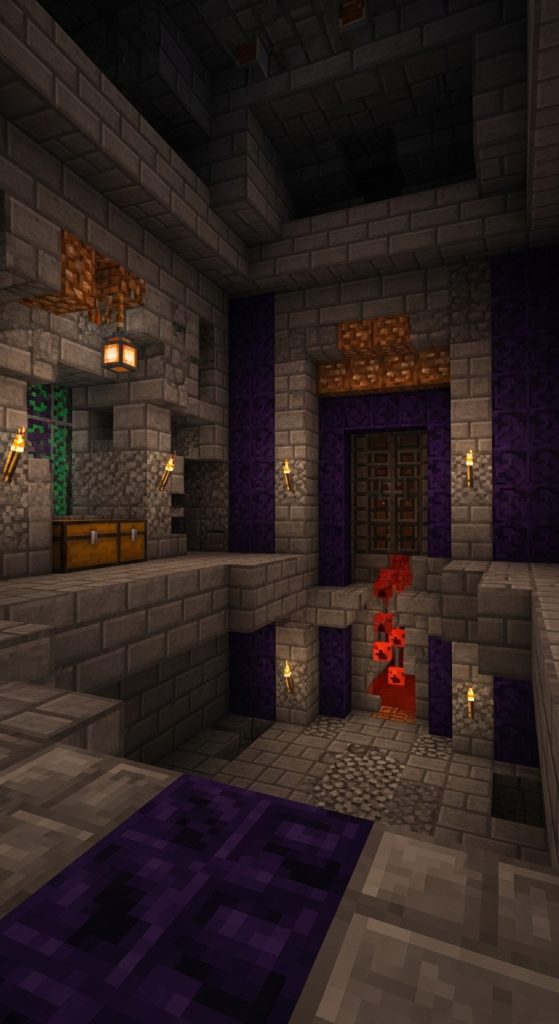
10. Secret Underground Lair / Vault
Concept: Hidden beneath the earth, maybe inside a cliff, with stone and obsidian, heavy metal doors (iron), torch / lantern flickers, treasure rooms, hidden pathways, maybe redstone-activated doors or traps.
Why It’s Cool & Dramatic:
- Adds an element of mystery and adventure.
- Great for players who like exploration, survival, or roleplay builds.
Key Components:
- Stone bricks, polished stone, obsidian accents.
- Iron door + lever / button + redstone circuits.
- Lighting sparse but dramatic: maybe wall lanterns or torches in niches.
- Treasure chests, vault style metal bars (iron bars), maybe glowstone accents.
- Secret-door mechanics or piston doors behind walls.
Tips:
- Use hidden lighting (recessed) so glowstone doesn’t look obvious.
- Use color contrast: dark stone vs gold / diamond / emerald blocks as treasure accent.
- Design maze-like pathways to enhance discovery.
Design Elements Common to All Ideas
To make any of these designs feel realistic, luxurious, and elegant, here are cross-cutting tips:
- Layered Lighting: ambient + accent + task lighting. Don’t rely just on torches. Sea lanterns, glowstone, lanterns, recessed lights.
- Depth & Texture: mix flat walls with inset features—alcoves, shelves, window recesses. Mix materials: smooth + rough, dark wood + light wood, metal accents.
- Color Palette: pick a coherent palette per room (e.g. neutrals + one accent color). Too many colors can feel chaotic in Minecraft’s blocky style.
- Furniture & Decor Details: item frames, paintings, flower pots, books, carpets, trapdoors, slabs to break blockiness.
- Symmetry vs Asymmetry: symmetry gives formality (palaces, grand halls), asymmetry gives a relaxed or natural feel (cottages, garden rooms).
- Use of Natural Elements: plants, water, daylight. Even in underground or industrial designs, bringing in natural touches lifts the aesthetic.
Example Build Workflow
Here’s a sample step-by-step process you can follow when building any of these interiors:
- Plan the Space & Scale: Decide room dimensions, ceiling height, number of floors.
- Choose Material Palette: wood types, stone types, accent blocks.
- Skeleton / Structure: walls, floors, ceiling, windows.
- Major Features First: fireplaces, staircases, large windows, balconies.
- Lighting Layout: hide some lights, show some ornate fixtures.
- Furniture & Decor: add seating, shelves, rugs, decorative items.
- Accent & Finishing Touches: banners, plant life, paintings, small details.
- Walkthrough & Polish: see from player perspective; fix awkward spots, dark corners.
Why These Ideas Are Pinterest-Friendly
- Visual Variety: styles vary (medieval, modern, rustic, industrial), which appeals to broad audiences.
- Strong Focal Points: throne room, underwater room, etc., make great screenshots.
- Luxury & Elegance: people love builds that look upscale.
- Detail Rich: small touches like lighting, decor make posts more saved.
- Mood & Ambience: each idea has a mood (cozy, majestic, tranquil), which helps engagement.