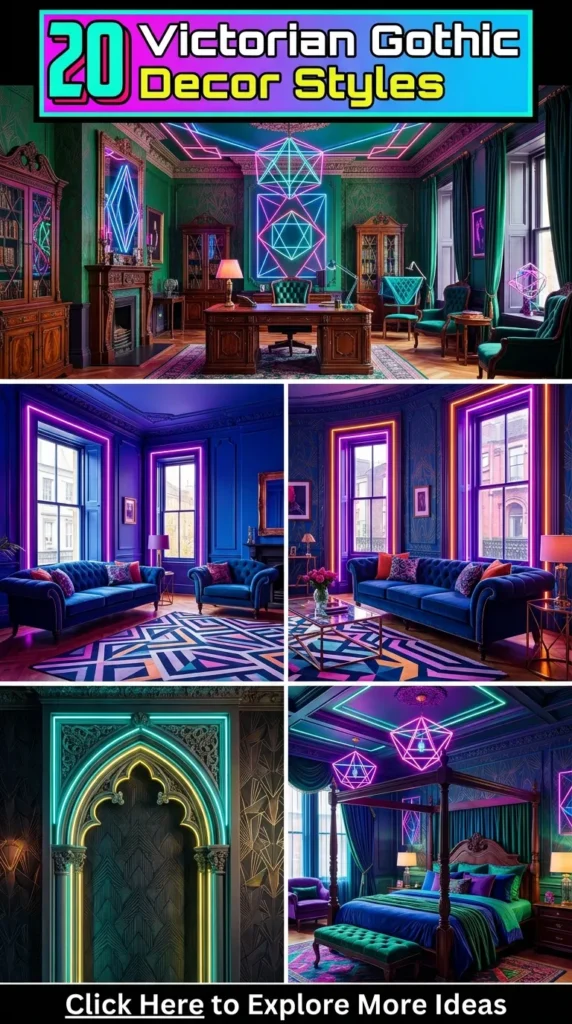
The Victorian revival, sweeping through the nineteenth century, remains one of the most spellbinding movements in interior design history. Merging the medieval mystery of pointed arches, soaring vaults, and heavy stonework with the refined, tactile luxury of the Victorian era, this design philosophy creates spaces that feel deeply romantic, atmospheric, and endlessly captivating. Far from being gloomy or austere, true Victorian Gothic decor is an exercise in theatrical opulence, rich textures, master craftsmanship, and a profound appreciation for historical narrative.
Bringing Victorian elegance into a modern home means embracing moody color palettes, intricate woodwork, dramatic lighting, and statement decor pieces that tell a story. Whether you want to transform a cozy reading corner into a clandestine scholar’s study or turn your dining room into a palatial banquet hall, these twenty exquisite design ideas will guide you in crafting a sanctuary of dark, timeless romance.
1. Moody Damask & Velvet Parlor
Introduction
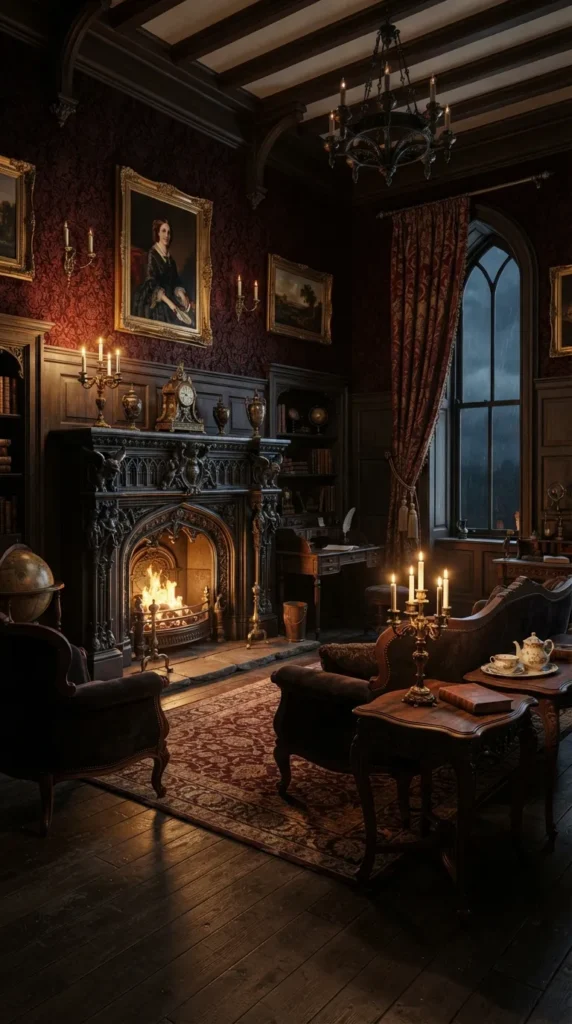
The parlor was the heart of formal Victorian entertainment, and creating a moody modern parlor begins with wrapping your walls in rich, tactile fabrics and deep, light-absorbing jewel tones.
What This Idea Means
This style rejects flat painted drywall in favor of immersive texture and shadow. By layering heavy damask patterns over deep charcoal, oxblood, or forest green walls, the room captures and diffuses light in an intimate, cocoon-like embrace.
How to Make It
- The Walls: Apply a traditional silk-blend damask wallpaper featuring intricate Victorian scrollwork, or paint the walls in a satin-finish dark aubergine and stencil metallic gold accents.
- The Seating: Arrange velvet-upholstered Victorian parlor chairs with tufted backs and dark carved wooden frames.
- The Accents: Layer heavy velvet throw pillows and fringe-trimmed textiles across seating areas.
Tips and Variations
- Pair dark walls with high-gloss white or cream ceiling molding to create a dramatic architectural contrast that frames the room.
- Essentials: Damask wallpaper, oxblood velvet fabric, tufted Victorian chairs, decorative fringe trim, antique gold picture frames.
2. Grand Gilt-Framed Ancestral Portrait Gallery
Introduction
A Victorian Gothic home is defined by its sense of history and legacy. Curating a gallery wall of dramatic oil portraits housed in heavy, ornate gilded frames brings an instant air of aristocratic heritage.
What This Idea Means
This decor element introduces narrative depth and human presence. The juxtaposition of dark, moody portrait subjects against gleaming gold leaf frames embodies the quintessential Gothic romance of the era.
How to Make It
- The Artwork: Collect vintage oil paintings or high-quality reproductions featuring nineteenth-century subjects, dramatic chiaroscuro lighting, and melancholic expressions.
- The Frames: House every canvas in wide, heavily carved wooden frames finished in antiqued or bright gold leaf.
- The Arrangement: Hang them in a dense, salon-style cluster along a stairwell or dark accent wall.
Tips and Variations
- Install small brass library lights directly above the prominent portraits to illuminate the canvases in authentic gallery fashion.
- Essentials: Vintage oil portrait prints, heavy gold leaf frames, picture hanging wire, brass picture lights.
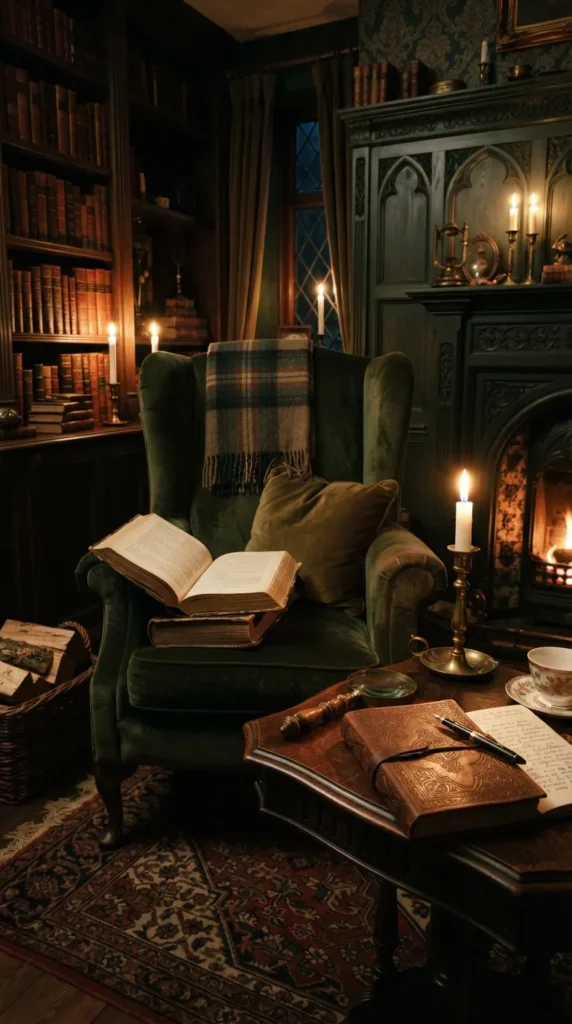
3. Victorian Library with Floor-to-Ceiling Woodwork
Introduction
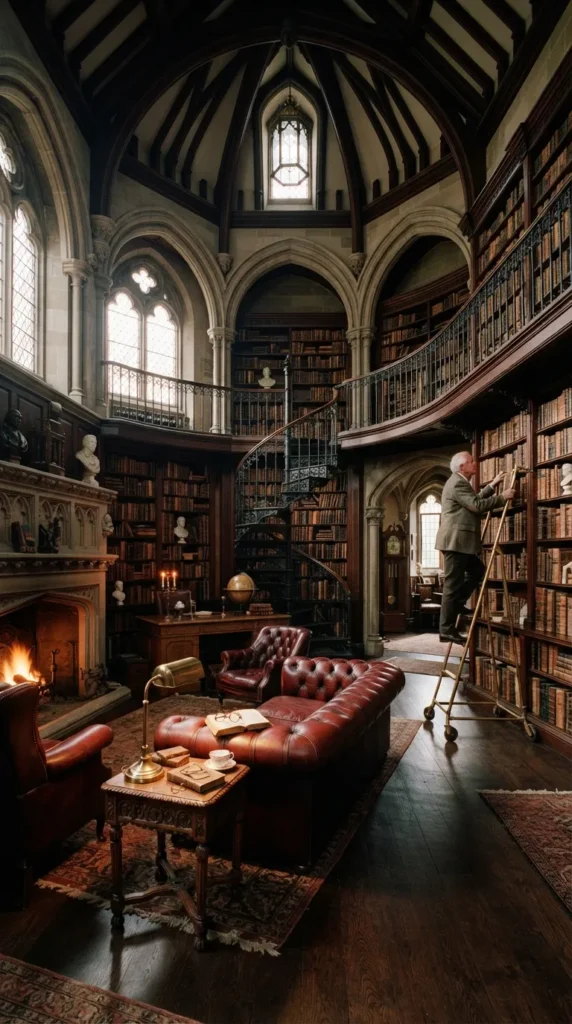
No Gothic estate is complete without a scholarly library. Floor-to-ceiling dark wood bookcases filled with leather-bound volumes create an atmosphere of intellectual sanctuary and mysterious charm.
What This Idea Means
This style celebrates wisdom, age, and tactile luxury. The rich scent of aged paper and dark timber combined with deep vertical shelving draws the eye upward and commands quiet reverence.
How to Make It
- The Millwork: Build or install custom floor-to-ceiling bookshelves in rich mahogany, walnut, or dark-stained oak.
- The Hardware: Incorporate a rolling brass library ladder and matching upper rail system.
- The Seating: Place a tufted leather Chesterfield sofa or a deep wingback armchair near a floor-standing brass reading lamp.
Tips and Variations
- Display vintage globes, brass magnifying glasses, and botanical specimens on the lower shelves to enhance the scholarly aesthetic.
- Essentials: Custom dark wood bookshelves, rolling library ladder, leather Chesterfield sofa, brass reading lamp.
4. Ornate Cast-Iron Fireplace Mantel Focal Point
Introduction
The fireplace is the architectural anchor of the Gothic home, traditionally framed by intricate cast-iron fire surrounds, decorative tiles, and monumental mantels.
What This Idea Means
Fire represents warmth and primal safety within a dark, moody environment. An ornate cast-iron or carved stone mantel turns a standard heating source into a sculptural masterpiece.
How to Make It
- The Surround: Install a vintage or reproduction cast-iron fireplace insert featuring intricate Gothic tracery or floral relief work.
- The Hearth: Lay geometric encaustic floor tiles or polished black slate around the hearth base.
- The Mantel Shelf: Top the surround with a heavy timber or carved stone shelf displaying brass candlesticks and vintage clocks.
Tips and Variations
- Place a decorative wrought-iron fireplace screen with pointed arch motifs in front of the firebox when not in use.
- Essentials: Cast-iron fireplace surround, encaustic hearth tiles, brass candlesticks, wrought-iron screen.
5. Dramatic Stained Glass Window Transoms
Introduction
Channeling the sacred architecture of medieval cathedrals, stained glass transoms and window panels cast colorful, jewel-toned light patterns across interior rooms.
What This Idea Means
Stained glass introduces divine light and privacy while acting as a standalone work of art. The interplay of sunlight through ruby, sapphire, and amber glass transforms the mood of the room throughout the day.
How to Make It
- The Installation: Hang or mount stained glass panels featuring traditional Gothic geometric patterns, lancet arches, or floral motifs directly inside existing window frames.
- The Placement: Ideal locations include transoms above interior or exterior doors, kitchen cabinets, or stairwell landings.
- The Framing: Ensure the glass panels are secured within sturdy wood or metal reinforcement channels.
Tips and Variations
- If privacy is needed without blocking natural light completely, apply a high-quality stained glass window film that mimics authentic leaded glass.
- Essentials: Leaded stained glass panels, mounting hooks, heavy-duty chain links, window film alternative.
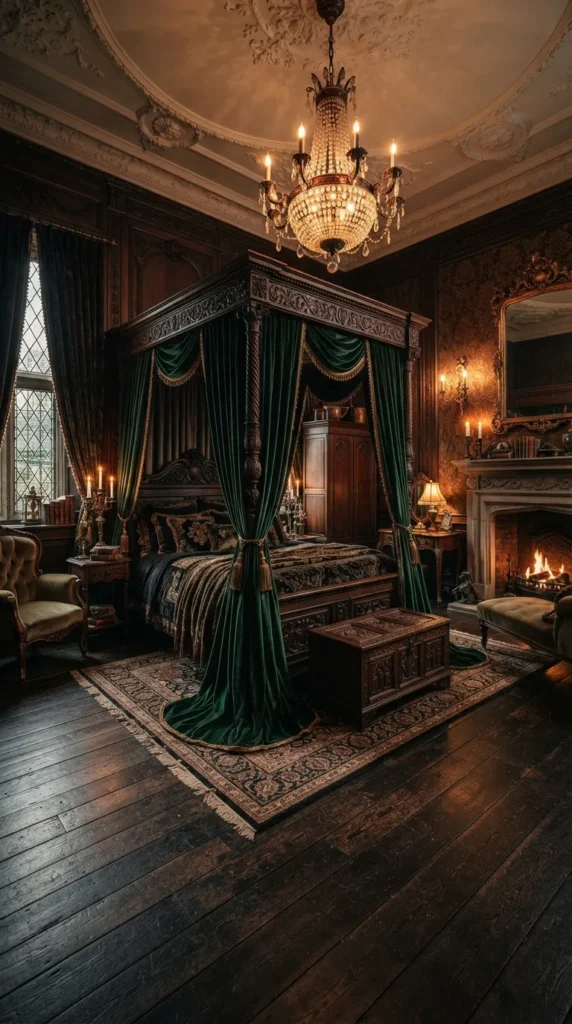
6. Opulent Velvet Draped Four-Poster Bed
Introduction
The bedroom becomes a private royal chamber with a massive dark wood four-poster bed draped in sweeping, heavy velvet curtains that seal out the world.
What This Idea Means
This design provides absolute sanctuary, luxury, and drama. Historically used for warmth and privacy in drafty manors, four-poster draped beds offer an unmatched sense of romantic seclusion.
How to Make It
- The Bed Frame: Choose a solid carved wood four-poster bed in espresso walnut or blackened oak.
- The Drapes: Hang long panels of heavyweight silk velvet in deep emerald, crimson, or black from the upper tester rails, letting them pool onto the floor.
- The Bedding: Layer the mattress with dark linen sheets, a quilted velvet coverlet, and brocade accent pillows.
Tips and Variations
- Hang a small wrought-iron or crystal chandelier directly over the center of the bed canopy for breathtaking romantic lighting.
- Essentials: Carved four-poster bed frame, silk velvet drapery panels, dark linen bedding, canopy mounting hooks.
7. Antique Apothecary Cabinet & Curio Display
Introduction
Embrace the Victorian fascination with natural history, botany, and medicine by styling a room with an antique apothecary cabinet filled with curiosities.
What This Idea Means
This style celebrates curiosity, science, and the mysterious. Glass jars, specimen boxes, and small drawers create an interactive, museum-like experience within your own home.
How to Make It
- The Cabinet: Acquire a vintage multi-drawer apothecary chest or a glass-front wooden curio cabinet.
- The Contents: Display amber glass medicine bottles, sea shells, crystals, pressed botanicals, and small taxidermy pieces.
- The Styling: Keep the surrounding lighting low to highlight the contents through the glass doors.
Tips and Variations
- Label vintage glass bottles with handwritten calligraphy tags on aged parchment paper for an authentic historical touch.
- Essentials: Apothecary cabinet, amber glass bottles, curio display shelves, vintage specimen jars.


8. Wrought-Iron Candelabras & Moody Candlelight
Introduction
Before electric illumination defined homes, candlelight shaped the evening hours. Incorporating heavy wrought-iron candelabras and flickering taper candles brings authentic Gothic atmosphere.
What This Idea Means
Candlelight softens harsh architectural lines and casts dancing shadows across dark walls, creating an intimate, hypnotic, and mysterious ambiance.
How to Make It
- The Fixtures: Place floor-standing wrought-iron candelabras in room corners and tabletop multi-armed brass candelabras on dining tables and mantels.
- The Candles: Use unscented beeswax or deep black paraffin taper candles that burn slowly and evenly.
- The Placement: Group candles in clusters of uneven heights to create visual rhythm.
Tips and Variations
- Use dripping wax taper candles to build up a textured, historic wax buildup on antique candle holders over time.
- Essentials: Wrought-iron floor candelabra, brass tabletop candle holders, black taper candles.
9. Ornate Plaster Ceiling Medallions & Crown Molding
Introduction
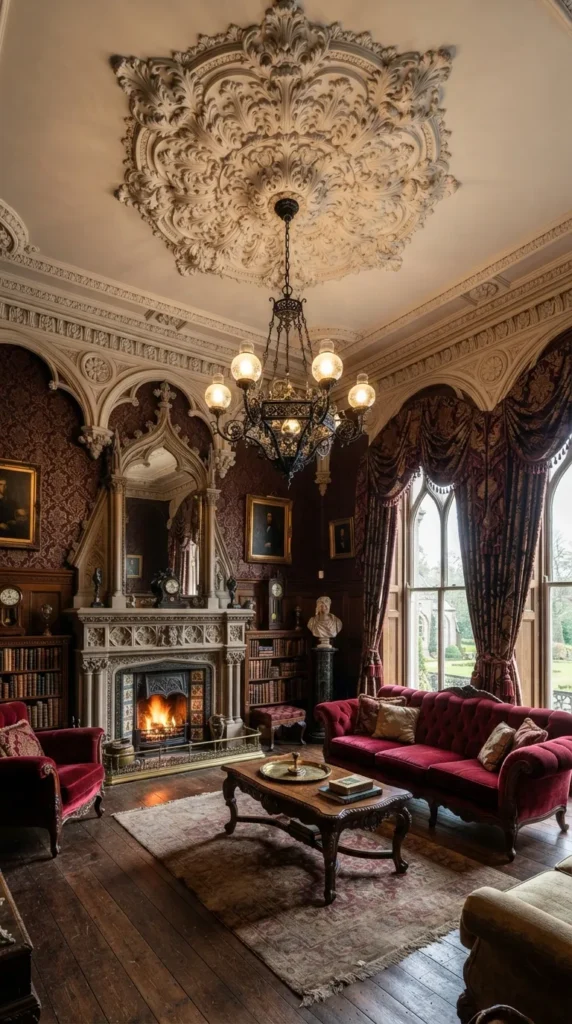
Drawing the eye upward, ornate plaster ceiling medallions featuring acanthus leaves, cherubs, and Gothic motifs frame dramatic chandeliers with historical flair.
What This Idea Means
Victorian ceilings were never neglected; they were treated as decorative canvases. Medallions and layered crown molding add structural weight and classical elegance to the room’s upper boundaries.
How to Make It
- The Medallion: Install a large, multi-tiered plaster or heavy polyurethane ceiling medallion featuring deep relief carvings around the light fixture.
- The Molding: Add deep crown molding along the ceiling perimeter, painting it in a contrasting metallic gold or satin black.
- The Finish: Highlight the raised plaster details with a light wash of dark antique glaze.
Tips and Variations
- Pair a monumental ceiling medallion with a black iron or crystal chandelier to anchor the room’s vertical axis.
- Essentials: Plaster ceiling medallion, crown molding, construction adhesive, gold leaf or glaze.
10. Dark Wood Wainscoting & Paneled Walls
Introduction
Lower wall treatments like board-and-batten, raised panels, or beadboard wainscoting painted in deep charcoal or stained in dark walnut add architectural gravitas.
What This Idea Means
Wainscoting protects walls while introducing structured rhythm and horizontal lines. Dark wood tones ground the space, making soaring ceilings feel intimate and grounded.
How to Make It
- The Paneling: Install vertical wooden slats or raised rectangular wall panels up to chair-rail height.
- The Paint/Stain: Finish the wood in a deep espresso stain or paint it in satin charcoal grey.
- The Cap: Top the wainscoting with a decorative wooden chair rail ledge to hold small framed art pieces.
Tips and Variations
- Pair dark lower wainscoting with lighter wallpaper above the chair rail to maintain balance and prevent the room from feeling too cavernous.
- Essentials: Wood paneling strips, chair rail molding, dark wood stain or satin paint, brad nailer.
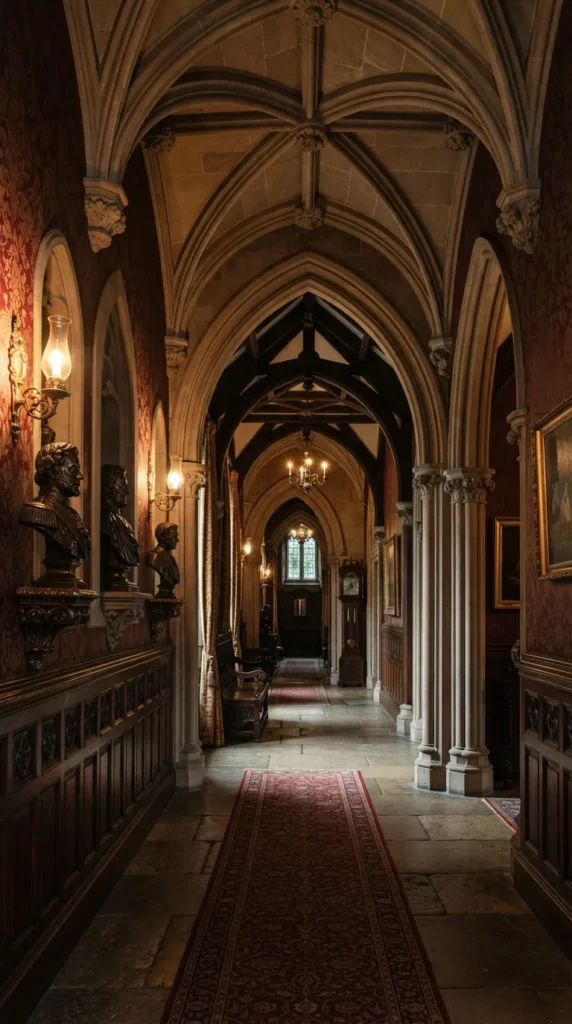
11. Gothic Archway Passages & Architectural Niches
Introduction
Replace standard rectangular doorways with pointed lancet arches or build recessed arched wall niches to house sculptures and candelabras.
What This Idea Means
The pointed arch is the signature architectural fingerprint of the Gothic style. Introducing arched openings alters spatial flow, imparting an ecclesiastical, cathedral-like dignity.
How to Make It
- The Archway: Frame existing doorways with drywall inserts or wooden casing cut into classic pointed lancet arch profiles.
- The Niches: Carve shallow recessed niches into living room or hallway walls to display antique busts or votive candles.
- The Finish: Paint the interior of niches in a contrasting metallic gold or deep crimson to make displayed items pop.
Tips and Variations
- Line the edges of Gothic archways with thin decorative wooden molding or faux stone veneer for added texture.
- Essentials: Drywall framing materials, wood casing, jigsaw, faux stone veneer.
12. Heavy Brocade & Tapestry Window Treatments
Introduction
Dress tall windows in heavy silk brocade, jacquard, or medieval-style tapestry curtains that cascade dramatically to the floor.
What This Idea Means
Heavy window dressings insulate the home while framing natural light like stage curtains. Rich, heavy weaves absorb sound and enhance the palatial seclusion of the room.
How to Make It
- The Fabric: Source heavyweight jacquard or brocade fabrics featuring rich botanical, heraldic, or heraldic lion motifs.
- The Rods: Hang the curtains from heavy iron rods finished with ornate finials.
- The Length: Ensure the panels pool onto the floor generously for an authentic historical drape.
Tips and Variations
- Layer your heavy brocade curtains over sheer black lace inner curtains for a double-layered gothic window treatment.
- Essentials: Heavy jacquard fabric, iron curtain rod, ornate finials, heavy-duty mounting brackets.
13. Victorian Birdcage & Botanical Specimen Display
Introduction
Incorporate vintage wire birdcages, terrariums, and bell jars showcasing dried ferns, moss, and faux butterflies to celebrate Victorian naturalism.
What This Idea Means
Victorians were obsessed with collecting and cataloging nature. Displaying botanical elements inside glass cloches or ornate iron cages bridges organic beauty with dark whimsy.
How to Make It
- The Display: Place glass bell jars (cloches) over dried moss, mushrooms, and quartz crystals on wooden bases.
- The Birdcage: Hang an ornate antique wire birdcage from a ceiling hook, filling it with trailing faux ivy and fairy lights instead of a live bird.
- The Styling: Arrange these pieces on library desks, sideboards, and mantel shelves.
Tips and Variations
- Spray-paint antique wire birdcages in matte black or distressed gold to match your room’s hardware.
- Essentials: Glass bell jars, wooden display bases, antique wire birdcage, preserved moss, dried botanicals.
14. Vintage Taxidermy & Natural History Cabinet
Introduction
Pay homage to nineteenth-century natural history studies by incorporating ethical vintage taxidermy, beetle collection frames, and geological specimens.
What This Idea Means
This decor style captures the spirit of scientific discovery and exploration that fascinated the Victorians, adding texture, intrigue, and stark natural forms to your decor.
How to Make It
- The Collection: Source ethical vintage taxidermy mounts (such as Victorian-style glass domes with butterflies or antique bird mounts) and framed insect shadowboxes.
- The Minerals: Display raw amethyst clusters, pyrite, and fossilized wood specimens on bookshelves.
- The Placement: Group natural history items alongside leather books and brass instruments.
Tips and Variations
- Ensure all taxidermy pieces are ethically sourced antiques or high-quality cruelty-free replicas.
- Essentials: Insect shadowbox frames, glass display domes, raw mineral crystals, vintage specimen labels.


15. Clawfoot Tub with Antique Brass Fixtures
Introduction
Turn your bathroom into a Gothic sanctuary with a deep cast-iron clawfoot tub finished with antique brass or oil-rubbed bronze plumbing fixtures.
What This Idea Means
Bathing in a clawfoot tub transforms daily hygiene into a luxurious, reflective ritual. The juxtaposition of white porcelain against dark walls and metallic feet exudes timeless elegance.
How to Make It
- The Tub: Install a freestanding cast-iron clawfoot tub, painting the exterior in a custom matte black or deep forest green.
- The Fixtures: Mount vintage-style exposed bridge faucets and shower risers in brushed brass.
- The Surround: Lay dark slate floor tiles and hang a heavy velvet shower curtain around the tub perimeter.
Tips and Variations
- Place a wooden bathtub caddy across the tub rim to hold a book, a glass of dark red wine, and a burning beeswax candle.
- Essentials: Cast-iron clawfoot tub, brass bridge faucet, slate floor tiles, waterproof velvet curtain.
16. Chinoiserie & Gothic Fusion Cabinetry
Introduction
The Victorian era loved exotic global fusion. Pairing dark Gothic wood cabinetry with hand-painted Chinoiserie gold lacquered panels creates a stunning, eclectic contrast.
What This Idea Means
This idea reflects the global trade routes and exotic tastes of nineteenth-century collectors. It introduces vibrant metallic highlights and mysterious oriental motifs into dark rooms.
How to Make It
- The Furniture: Source a black high-gloss lacquered cabinet or buffet featuring hand-painted gold leaf Chinese landscapes and floral motifs.
- The Hardware: Install ornate pierced brass drop-pull handles.
- The Placement: Use the cabinet as a striking sideboard in a dining room or an entryway statement piece.
Tips and Variations
- Place crystal decanters and silver cocktail service items on top of the lacquered cabinet to enhance the entertaining focal point.
- Essentials: Lacquered Chinoiserie cabinet, gold leaf paint, brass drop-pulls, crystal decanters.
17. Victorian Seance Parlor & Divination Corner
Introduction
Tap into the Victorian obsession with spiritualism and the occult by creating a dedicated divination corner featuring tarot tables, crystal balls, and antique planchette boards.
What This Idea Means
This playful, atmospheric concept leans into the mysterious and mystical side of the Victorian era, offering a fascinating conversation area for guests.
How to Make It
- The Table: Place a small round wooden table draped with a heavy fringed velvet tablecloth in a quiet room corner.
- The Props: Top the table with a genuine crystal glass sphere on a brass stand, a deck of vintage tarot cards, and an antique brass magnifying glass.
- The Lighting: Hang a low-slung pendant light with a smoked glass shade directly above the table.
Tips and Variations
- Frame vintage patent art prints of early spirit photography or seance horns on the adjacent wall.
- Essentials: Velvet tablecloth with fringe, crystal ball on brass stand, vintage tarot deck, smoked glass pendant.
18. Heavy Brass & Iron Staircase Balustrades
Introduction
Transform your staircase into a grand architectural feature by replacing modern plain railings with heavy wrought-iron scrolls and polished brass newel posts.
What This Idea Means
Stairs in Victorian homes were designed for dramatic descents. Elaborate ironwork creates rhythmic shadows and structural majesty along the vertical spine of the home.
How to Make It
- The Balustrades: Install custom wrought-iron balusters featuring twisting ribbons, leaf scrolls, and Gothic spear tips.
- The Newel Posts: Anchor heavy turned wooden or brass newel posts at the base of the stairs.
- The Handrail: Cap the balustrade with a smoothly polished dark mahogany handrail.
Tips and Variations
- Run a deep crimson or black patterned carpet runner down the center of the stairs, secured with polished brass stair rods.
- Essentials: Wrought-iron stair balusters, mahogany handrail, stair runner carpet, polished brass stair rods.
19. Ornate Filigree Wall Sconces & Gaslight Fixtures
Introduction
Illuminate hallways and dark corners with antique-style filigree wall sconces designed to mimic old gaslight fixtures with glass chimneys.
What This Idea Means
Lighting fixtures act as wall jewelry in Gothic design. Intricate metal filigree casts delicate shadow webs across surrounding wallpaper when illuminated.
How to Make It
- The Sconces: Mount cast-brass or blackened iron wall sconces featuring intricate filigree work and frosted glass chimney shades.
- The Bulbs: Use flame-tip amber LED bulbs that flicker softly to simulate real gas flames.
- The Placement: Position pairs of sconces flanking mirrors, doorways, or large portrait frames.
Tips and Variations
- Connect your wall sconces to a dimmer switch to easily transition from bright illumination to deep, moody twilight.
- Essentials: Brass filigree wall sconces, frosted glass chimneys, amber flame-tip LED bulbs, dimmer switch.
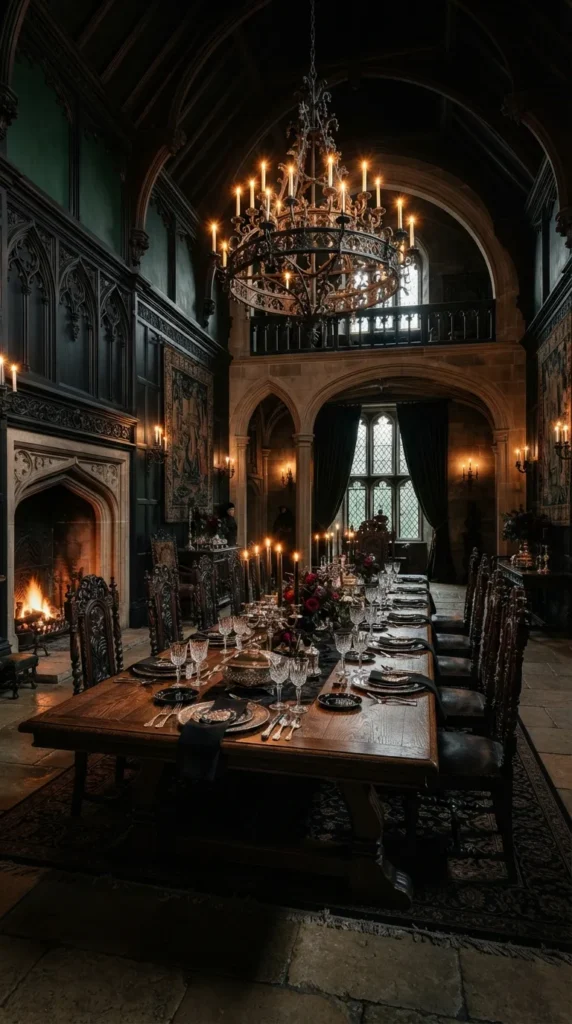
20. Midnight Black & Emerald Green Dining Enclave
Introduction
Turn your dining room into a moody banquet hall by painting the walls and ceiling in midnight black and emerald green, creating an intimate, dramatic space for hosting dinners.
What This Idea Means
This style elevates dining into a theatrical event. Dark, immersive surroundings focus all attention on the table, the food, and the company, reminiscent of a grand ancestral feast.
How to Make It
- The Walls & Ceiling: Paint the entire dining room—including crown molding and ceiling—in a matte midnight black or deep emerald green.
- The Table: Anchor the room with a massive dark oak or walnut trestle dining table.
- The Lighting: Suspend a grand wrought-iron candle chandelier directly over the center of the table.
Tips and Variations
- Set the table with vintage silver cutlery, crystal stemware, and dark taper candles in heavy brass holders for an unforgettable tablescape.
- Essentials: Matte black and emerald green paint, dark wood dining table, wrought-iron chandelier, silver tableware.
Conclusion
Embracing Victorian Gothic decor is an invitation to infuse your home with romance, mystery, and timeless elegance. By thoughtfully layering moody jewel tones, rich velvet textures, ornate woodwork, and historical curiosities, you can transform ordinary rooms into an enchanting estate that feels entirely your own. Plan your lighting carefully, invest in quality foundational antiques, and enjoy the captivating journey of bringing dark architectural romance to life in your modern sanctuary.


