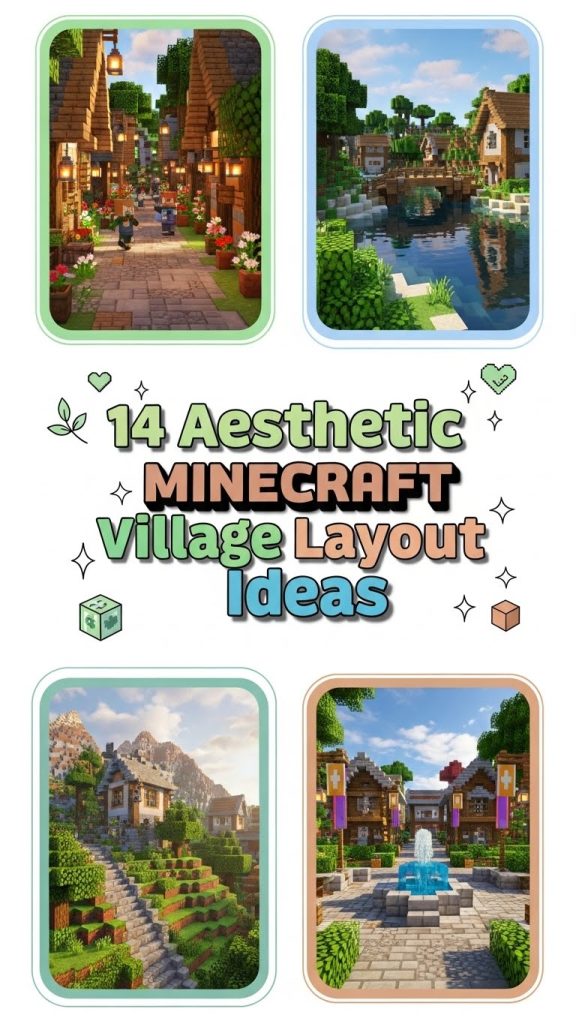
Creating an aesthetic Minecraft village is about more than just placing houses randomly. A truly beautiful village feels alive, balanced, and thoughtfully designed. From natural pathways to harmonious block palettes, the layout of a village can turn a simple build into a breathtaking world that feels cozy, realistic, and immersive.
In this article, we explore aesthetic Minecraft village layout ideas that focus on realism, visual harmony, and practical design. Each idea is carefully structured to help your village look organic, Pinterest-worthy, and enjoyable to explore. Whether you love medieval themes, cozy countryside vibes, or fantasy-inspired landscapes, these layouts will inspire your next survival or creative project.
1. Riverside Organic Village Layout
A riverside village layout brings instant charm and realism. Instead of forcing symmetry, houses are placed naturally along winding riverbanks. Small wooden docks, fishing huts, and farmland patches hug the water’s edge, creating a peaceful, lived-in feel.
Paths curve gently, following the river’s shape rather than cutting through terrain unnaturally. Bridges made of wood, stone, or mossy blocks connect both sides of the village, becoming focal points instead of simple crossings. Lanterns hanging from fences reflect softly on the water at night, enhancing the cozy atmosphere.
This layout works best with varied house sizes to avoid repetition. Taller buildings can sit slightly back from the river, while smaller cottages feel tucked into the landscape. The result is a calm, storybook-like village that feels perfect for survival gameplay.

2. Hillside Terrace Village Layout
Building a village on a hillside adds depth and visual interest. Instead of flattening the terrain, this layout embraces elevation changes by creating terraced platforms for houses, farms, and community spaces.
Stone retaining walls, stairs, and slabs help transition between levels smoothly. Each terrace can have a different purpose—homes on upper levels, farms in the middle, and communal buildings at the base. This layered approach makes the village feel intentional and realistic.
From a distance, the village appears stacked organically into the mountain, blending beautifully with nature. From up close, players enjoy scenic viewpoints, balconies, and winding staircases that invite exploration.

3. Medieval Central Plaza Village Layout
This layout revolves around a strong central hub, inspired by medieval European towns. At the heart of the village lies a plaza featuring a well, fountain, statue, or marketplace. All main paths radiate outward from this center, creating a sense of order without looking rigid.
Houses are packed closely together near the plaza and spread out as you move toward the outskirts. This density creates a bustling town core while maintaining peaceful residential zones beyond.
The aesthetic shines when using varied textures like stone bricks, wood beams, and subtle detailing such as banners and flower boxes. This layout feels perfect for roleplay worlds and large survival communities.

4. Coastal Fishing Village Layout
A coastal village layout focuses on the relationship between land and sea. Homes are built close to the shoreline, often elevated on stilts or stone foundations to protect from waves. Fishing docks, boats, and net decorations bring life to the waterfront.
Paths are typically made from sand, gravel, or weathered planks, giving the village a rugged, seaside charm. The village may curve along the coast rather than forming a straight line, enhancing realism.
This layout looks especially stunning at sunset or during storms, making it a favorite for cinematic Minecraft screenshots and Pinterest inspiration boards.

5. Forest-Clearing Cozy Village Layout
Nestled within a forest clearing, this village layout feels warm, intimate, and peaceful. Trees surround the village naturally, providing shade and privacy without overwhelming the builds.
Houses are spaced slightly apart and connected by dirt or path-block walkways that weave through grass and flowers. Small gardens, beehives, and campfires add to the rustic charm.
The key to this layout is restraint—avoid cutting down too many trees. Let nature frame the village, making it feel like it belongs there rather than replacing the environment.

6. Circular Fairy-Tale Village Layout
A circular layout brings a soft, fairy-tale aesthetic that feels magical yet organized. Houses are arranged in a ring around a central feature such as a large tree, fountain, or enchanted garden.
Paths follow the circular shape, keeping movement smooth and visually pleasing. This layout works beautifully with rounded roofs, pastel colors, and decorative lighting like lanterns and glow berries.
While not always realistic in real-world terms, this layout excels in visual storytelling and fantasy builds, making it perfect for creative worlds and Pinterest showcases.

7. Farmland-Integrated Village Layout
In this layout, farming is not pushed to the outskirts—it becomes part of the village’s identity. Crop fields, animal pens, and orchards are woven between homes, creating a lived-in agricultural settlement.
Paths naturally snake between farmland, with fences and hedges defining spaces without feeling boxed in. Water canals double as irrigation and decorative elements.
This layout feels especially immersive in survival mode, where functionality meets beauty. It tells a story of villagers who rely on the land around them every day.

8. Cliffside Vertical Village Layout
For players who love dramatic scenery, a cliffside village layout offers stunning visuals. Homes are built into the cliff face, stacked vertically with balconies and overhangs.
Ladders, staircases, and bridges connect each level, creating an adventurous exploration experience. The layout feels compact yet expansive due to its vertical nature.
Lighting is essential here—lanterns and torches not only add safety but highlight architectural details against the stone backdrop, making the village glow at night.

9. Snowy Nordic Village Layout
A snowy village layout draws inspiration from Nordic and alpine settlements. Houses are tightly grouped to protect against harsh weather, with steep roofs designed to shed snow.
Paths are narrow and often bordered by fences or lanterns to guide players through snowstorms. The limited color palette—wood, stone, and white—creates a clean, elegant aesthetic.
This layout shines in colder biomes, offering a calm, cozy contrast to the surrounding frozen landscape.

10. Mixed-Biome Border Village Layout
A mixed-biome village sits at the edge of two or more biomes, blending elements from each environment. One side of the village may feature desert-style builds, while the other leans toward plains or forest aesthetics.
The layout acts as a transition zone, with gradual changes in block palettes and terrain. Paths may shift from sand to dirt, and vegetation becomes denser as you move across the village.
This approach creates a dynamic, visually interesting settlement that feels naturally evolved rather than planned all at once.

Final Thoughts
An aesthetic Minecraft village layout is about balance—between nature and structure, function and beauty, realism and creativity. By choosing a layout that complements the surrounding terrain and tells a story, you can transform your village into a place that feels truly alive.
These 10 ideas are not just visual concepts but foundations you can adapt, expand, and personalize. Whether you’re building for survival gameplay or Pinterest-perfect visuals, the right layout will make all the difference.