Spread the love

Designing a play area on a sloped yard can be a challenge—but it also opens up a world of creative possibilities. With thoughtful planning, you can transform uneven terrain into a fun, safe, and visually appealing playground for children. Sloped yards naturally allow for dynamic elements like slides, ramps, and terraced play zones that spark creativity and encourage physical activity. Here are ten ingenious ideas to turn your sloped yard into a wonderland for kids.


1. Terraced Adventure Playground

Terracing a sloped yard is a brilliant way to create multiple levels for play. By building retaining walls with natural stone or treated wood, each tier becomes a separate activity zone. One level can house a sandbox, while another features a climbing wall or rope ladder. Terraces prevent soil erosion, making the yard safer while adding aesthetic appeal.

Tips:

  • Use soft mulch or rubber mats on each terrace to cushion falls.
  • Add small shrubs or potted plants along the edges for a natural look.
  • Incorporate benches for parents to supervise comfortably.

2. Hillside Slide Fun

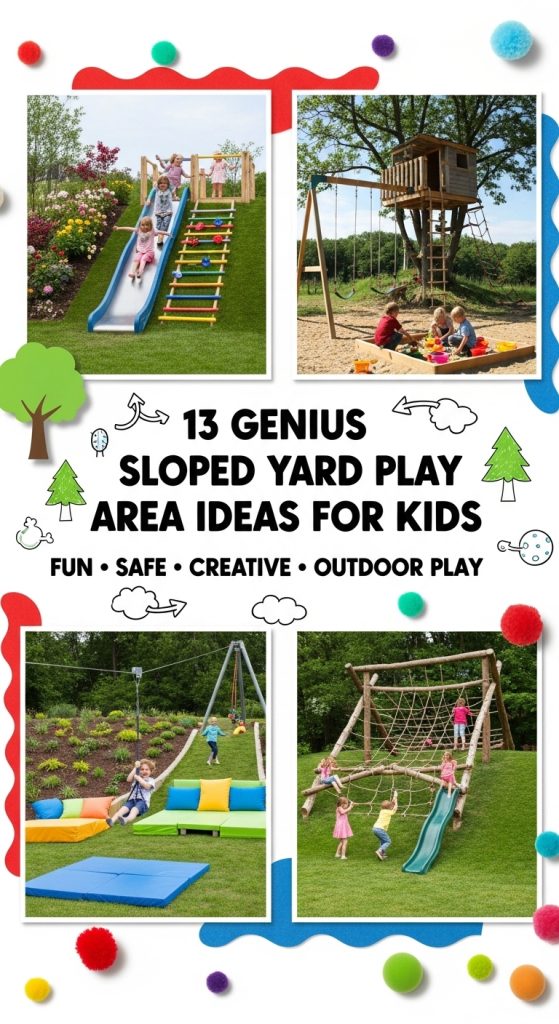
Turn the slope into an exciting slide zone! A wooden or plastic slide built into the natural slope offers endless fun. Depending on the gradient, slides can range from gentle and toddler-friendly to steeper slides for older kids. Ensure proper safety by installing side rails and a soft landing area at the bottom.

Tips:

  • Use durable, weather-resistant materials like treated lumber or HDPE plastic.
  • Create a landing zone with rubber mulch, sand, or grass to prevent injuries.
  • Add a mini climbing path to reach the slide entrance for extra adventure.

3. Rope and Net Climbing Wall

Harness the slope for an outdoor climbing experience. Installing rope ladders, net climbers, or cargo nets across the hillside encourages coordination, balance, and upper body strength. A gentle incline works well for younger children, while steeper sections challenge older ones.

Tips:

  • Use sturdy, UV-resistant ropes and secure anchor points.
  • Position the climbing structure over soft ground covering like pea gravel or mulch.
  • Combine with a treehouse or platform at the top for extra excitement.

4. Mini Zipline Adventure

A gentle zipline can transform a sloped yard into a thrilling playground. Secure the line from a higher point to a lower landing zone, adjusting the slope for safety. Kids love the feeling of gliding down the hill, and parents will enjoy the organized flow of play it encourages.

Tips:

  • Ensure the zipline height and slope are age-appropriate.
  • Install padding or soft mulch at the landing area.
  • Regularly check cables and anchors for wear and safety.

5. Sloped Sandbox with Steps

Sandboxes don’t need to sit on flat ground. Building a terraced or sloped sandbox makes digging and exploring more dynamic. Create steps or ramps leading to different levels, allowing children to move between sections with ease. Adding small tunnels or hideaways beneath sand terraces can enhance imaginative play.

Tips:

  • Line the sandbox with drainage fabric to prevent water pooling.
  • Include a sunshade or pergola to protect kids from UV rays.
  • Surround the area with wooden edging to maintain shape and avoid sand spillage.

6. Hillside Obstacle Course

A sloped yard naturally lends itself to an obstacle course. Use ropes, stepping stones, balance beams, and tunnels to design a challenging and engaging path from top to bottom. The incline makes climbing more fun while improving physical fitness and agility.

Tips:

  • Mix natural elements like logs and stones with constructed features.
  • Include safety surfaces and frequent resting points.
  • Tailor difficulty levels for different age groups.

7. Nature-Inspired Treehouse Play Zone

Building a treehouse or elevated play structure on a slope enhances safety and aesthetics. The slope allows for creative entryways like rope bridges, slides, or stairs that connect different levels. Integrating the play area with existing trees gives a natural, magical feel.

Tips:

  • Ensure sturdy support posts or attach structures safely to trees.
  • Use non-slip materials for steps and platforms.
  • Add swings, slides, or climbing walls to increase play options.

8. Terraced Garden & Play Combination

Incorporate gardening into the sloped play area. Terraced garden beds interspersed with play features like mini slides, stepping paths, or sand zones create an interactive learning environment. Kids can explore plants, dig in soil, and move between different levels safely.

Tips:

  • Use raised beds to define play zones.
  • Choose low-maintenance, child-friendly plants.
  • Add a water play area or small fountain for extra engagement.

9. Spiral or Curved Ramp Pathways

Instead of straight ramps, create winding paths or spirals along the slope. These can serve as bike tracks, scooter paths, or walking routes. Adding gentle curves makes movement slower and safer, while still providing an active experience.

Tips:

  • Use durable materials like pavers, compacted gravel, or asphalt.
  • Include guard rails for safety on steeper curves.
  • Incorporate themed decorations like painted rocks or garden art for visual appeal.

10. Multi-Level Playhouse Village

For larger sloped yards, consider a multi-level playhouse village. Each level can have a tiny house, climbing bridge, or lookout tower connected via steps or ramps. Children can move through different “rooms” of the yard, enhancing imaginative and social play.

Tips:

  • Ensure each structure has a safe fall zone around it.
  • Use weather-resistant wood or composite materials.
  • Incorporate benches, small picnic areas, or sand zones between houses.

Safety and Design Considerations

When designing play areas on slopes, safety is paramount. Soft ground coverings like rubber mulch, sand, or grass help reduce the risk of injuries. Railing, guardrails, and secure anchors prevent accidents on slides, ramps, and climbing structures. Regular inspections of equipment and terrain are essential, especially after heavy rain or weather events that might affect the slope’s stability.

Aesthetic appeal is equally important. Incorporate natural elements, colorful features, and themed play zones to make the yard inviting. Using materials like treated wood, natural stone, and UV-resistant plastics ensures longevity and reduces maintenance. Planting shrubs, flowers, or low hedges along terraces not only prevents erosion but also creates a visually stimulating environment.


Maximizing Fun on a Slope

Sloped yards offer a unique advantage: they allow gravity-driven play. Slides, rolling balls, and zip lines naturally fit into inclines, encouraging movement and physical activity. Multiple levels and pathways create an adventurous atmosphere, stimulating children’s curiosity and imagination. By carefully planning activity zones, safety measures, and aesthetic features, you can transform even a challenging slope into a captivating playground.


Conclusion

With creativity and careful planning, sloped yards can become extraordinary play areas that children adore. Terraces, slides, climbing walls, ziplines, and multi-level structures all take advantage of the natural incline while offering safe, dynamic, and visually engaging play opportunities. Whether your slope is gentle or steep, these ten ideas demonstrate that ingenuity can turn every yard into a vibrant, playful oasis for kids.

By TOM