Minecraft’s jungle biome feels like it was made for dreamers. Towering trees, hanging vines, soft green light filtering through leaves, and the constant feeling of being hidden above the ground make it one of the most magical places to build. When you combine the jungle biome with a survival playstyle, tree houses become more than decoration—they turn into safe havens, creative expressions, and immersive homes that feel alive.
A jungle tree house in survival mode is not just about building high. It’s about blending with nature, using available materials wisely, and creating a space that feels cozy, adventurous, and realistic. Aesthetic tree houses can be simple or complex, small or expansive, but the most beautiful ones feel like they belong to the jungle itself.
Below are aesthetic jungle tree house ideas designed specifically for Minecraft survival, focusing on realism, warmth, and visual storytelling—perfect for Pinterest inspiration and long-term worlds.
1. Cozy Starter Jungle Tree House
This idea is perfect for the early days of survival when resources are limited but creativity is high. A cozy starter jungle tree house is built directly into a thick jungle tree trunk, using jungle planks, slabs, and fences. The goal is comfort, not complexity.
The interior usually features a small bed area, crafting table, furnace, and chest storage, all tucked neatly into the curve of the tree. Lanterns replace torches to give warm lighting without ruining the aesthetic. Trapdoors and slabs help save space while adding detail.
From the outside, this build looks organic and natural, with vines growing down the sides and leaves partially covering the walls. A small wooden balcony or ladder entrance adds charm and realism.
This type of tree house feels safe, intimate, and deeply connected to the jungle—perfect for players who enjoy slow survival progression and immersive gameplay.
2. Multi-Level Canopy Tree House
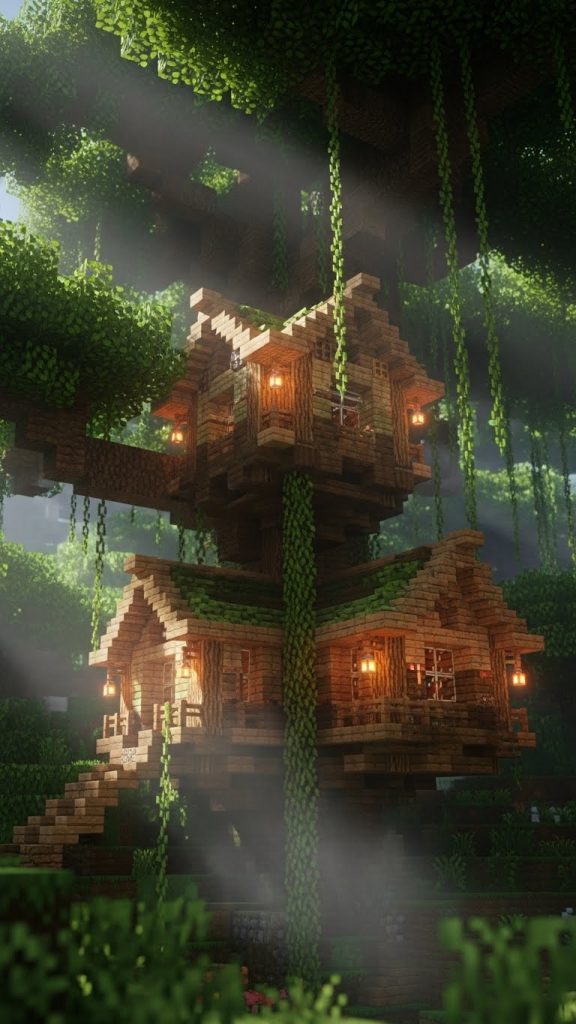
A canopy tree house takes advantage of the jungle’s height by spreading living spaces across multiple levels. Each floor serves a purpose: one for storage, one for sleeping, another for crafting or enchanting.
Wooden platforms connect through ladders, staircases, or rope-style bridges made from fences and chains. Leaves are intentionally left around the structure to blend it into the treetops rather than clearing everything away.
The magic of this design lies in vertical living. You feel like you’re moving through the jungle canopy rather than simply standing above it. Windows made from glass panes allow sunlight to pour in during the day, while lanterns glow softly at night.
This idea works beautifully in survival because it can be expanded slowly over time as you gather more materials.
3. Hanging Bridge Jungle Tree House
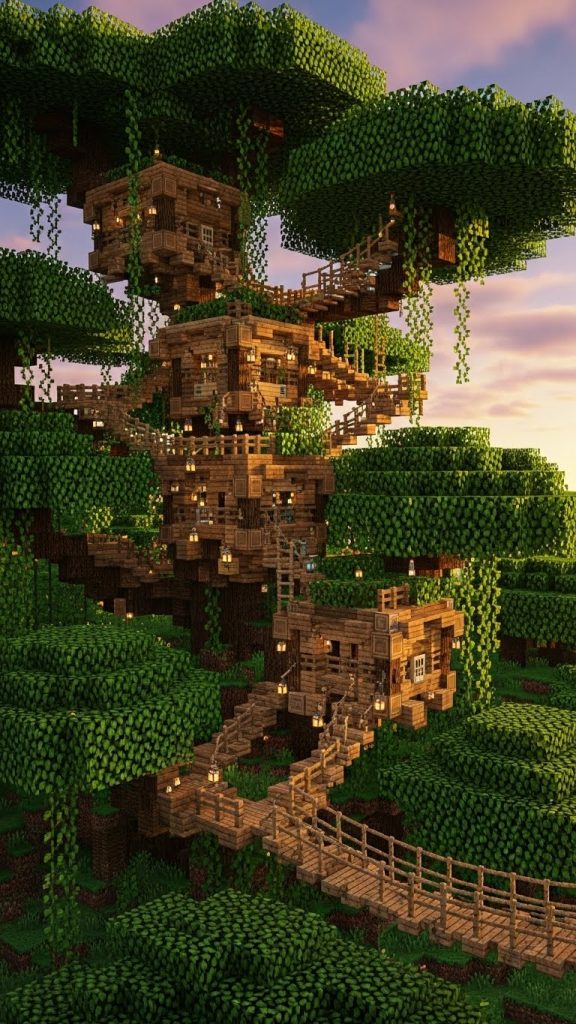
This aesthetic focuses on connection and movement. Instead of one single structure, multiple small tree houses are connected by hanging bridges suspended between jungle trees.
Each mini tree house can have its own purpose—one for sleeping, one for storage, one for enchanting. The bridges, built with slabs, chains, fences, and trapdoors, sway visually and add cinematic depth.
The jungle below feels alive when viewed from above, and walking across the bridges at sunset or during rain creates a dramatic, cozy atmosphere. This build style feels adventurous and story-driven, like a hidden jungle village in the sky.
In survival mode, this design encourages exploration and gradual expansion, making it both practical and visually stunning.
4. Jungle Tree House with Waterfall View
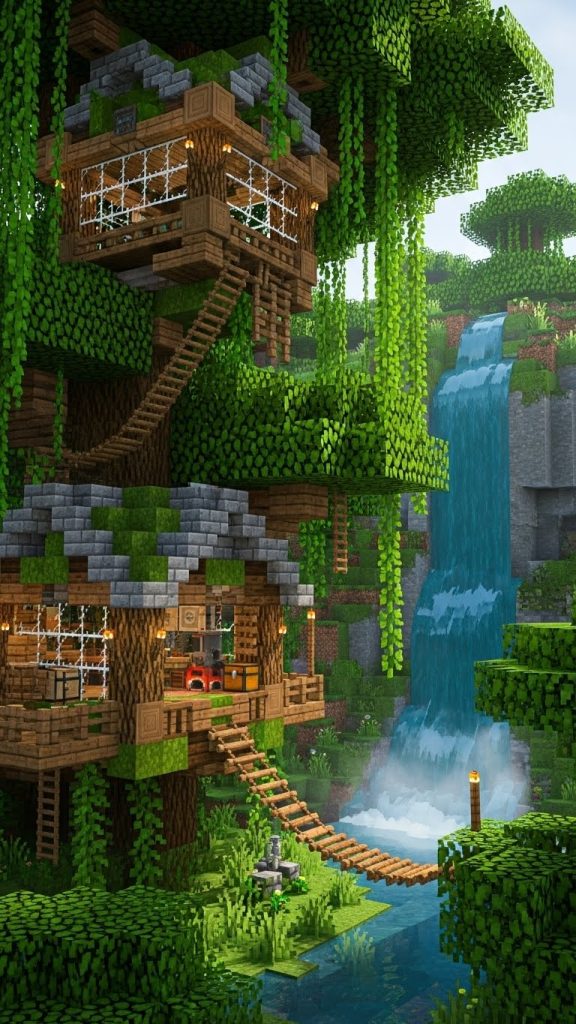
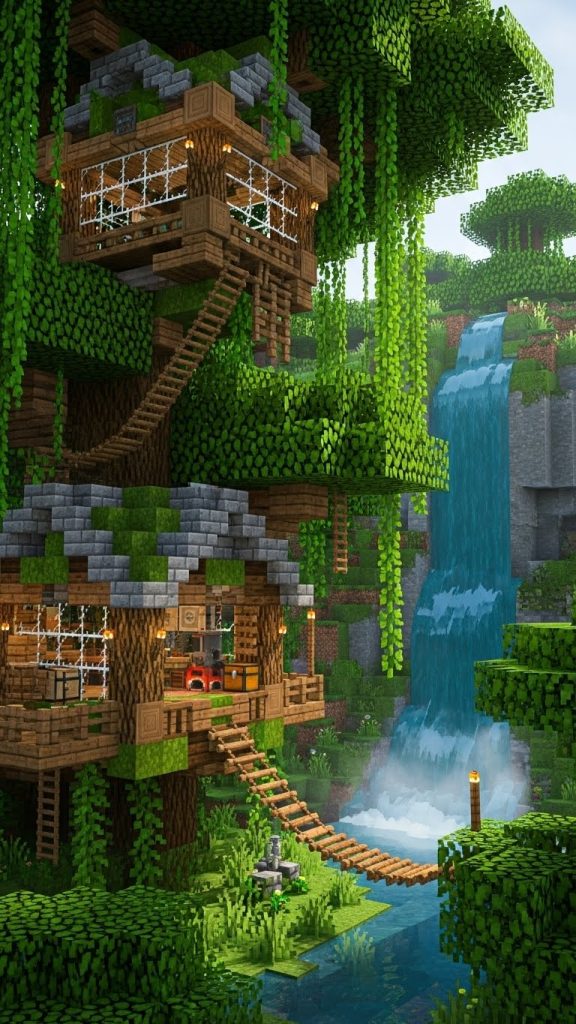
Few things feel more peaceful than water flowing through a jungle. This tree house idea places the home beside—or partially wrapped around—a natural waterfall.
Glass panes are used generously to create viewing windows that frame the water like living artwork. The sound of flowing water adds to the calming experience, especially at night when lantern light reflects off the surface.
Wood, stone, and mossy blocks blend the structure into the terrain, making it feel naturally grown rather than built. A small balcony overlooking the waterfall becomes the perfect spot to watch sunsets or rainstorms.
This design feels luxurious without being unrealistic, making it ideal for survival worlds that value atmosphere and immersion.
5. Hidden Leaf-Covered Jungle Tree House
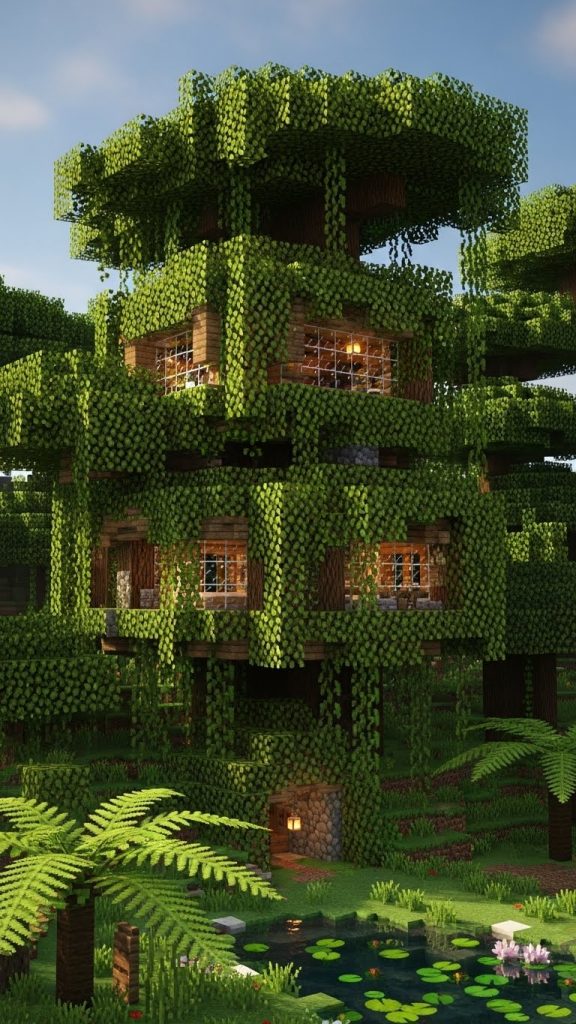
Sometimes the most aesthetic builds are the ones you can barely see. This tree house is almost completely concealed by jungle leaves, vines, and foliage.
The structure uses minimal exposed wood, relying on trapdoors, slabs, and greenery to camouflage the walls. Entrances are hidden behind leaf curtains or vine ladders, giving the feeling of a secret base.
Inside, the space is surprisingly warm and organized, with glow berries, lanterns, and subtle lighting to prevent mob spawns without breaking the illusion.
This idea is perfect for players who love stealth, realism, and the feeling of being part of the jungle rather than dominating it.
6. Jungle Tree House with Spiral Staircase Trunk
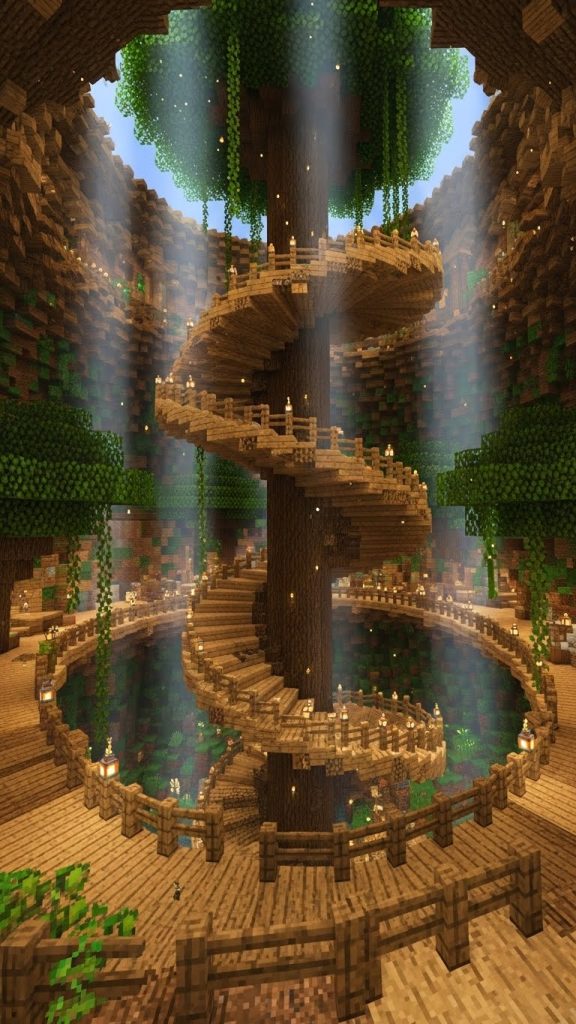
This design centers around a massive jungle tree trunk hollowed out to create a spiral staircase. Each level branches outward into small rooms or balconies.
The staircase itself becomes the visual highlight, using slabs, stairs, and fences to create a smooth spiral effect. Natural light enters through small windows carved into the trunk.
This build feels architectural and advanced while still fitting perfectly into survival gameplay. It’s ideal for players who enjoy detailed interiors and vertical organization.
From the outside, the tree remains mostly intact, preserving the jungle’s natural beauty while hiding a complex structure within.
7. Jungle Survival Tree Base with Farm Integration
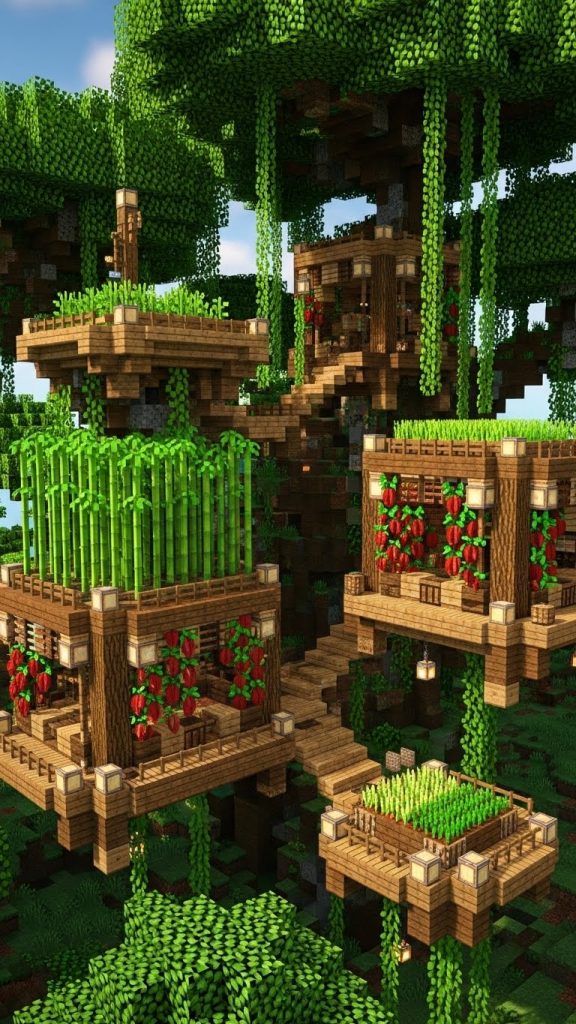
This tree house isn’t just beautiful—it’s functional. Built high in the jungle canopy, it integrates survival farms directly into the design.
Small crop patches, bamboo farms, cocoa beans, and even bee nests are placed around platforms and balconies. Water streams are hidden within leaves to irrigate crops naturally.
The result is a living ecosystem where your home and food source exist together. The build feels alive, practical, and deeply immersive.
In survival mode, this idea reduces travel while maintaining a stunning aesthetic that feels intentional rather than industrial.
8. Luxury Jungle Tree Villa
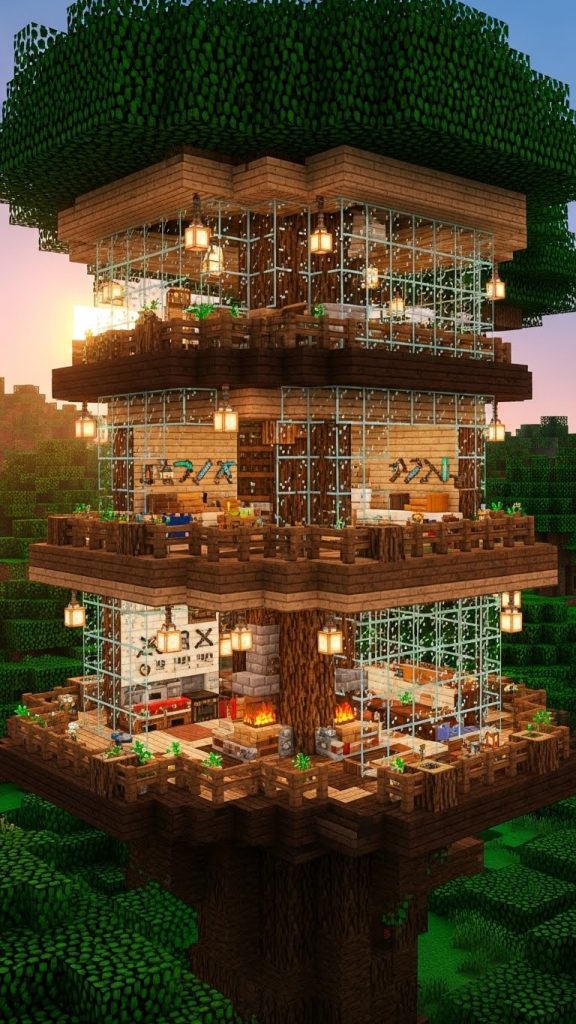
For players who have progressed far in survival, this idea transforms the jungle tree house into a luxury villa in the sky.
Large glass walls, spacious interiors, custom furniture made from stairs and trapdoors, and carefully placed lighting create an upscale feel without breaking Minecraft’s natural charm.
Balconies wrap around the tree, offering panoramic jungle views. Decorative details like flower pots, bookshelves, and banners add personality.
Despite its elegance, the build still uses mostly renewable materials, making it survival-friendly and sustainable.
9. Jungle Tree House Village
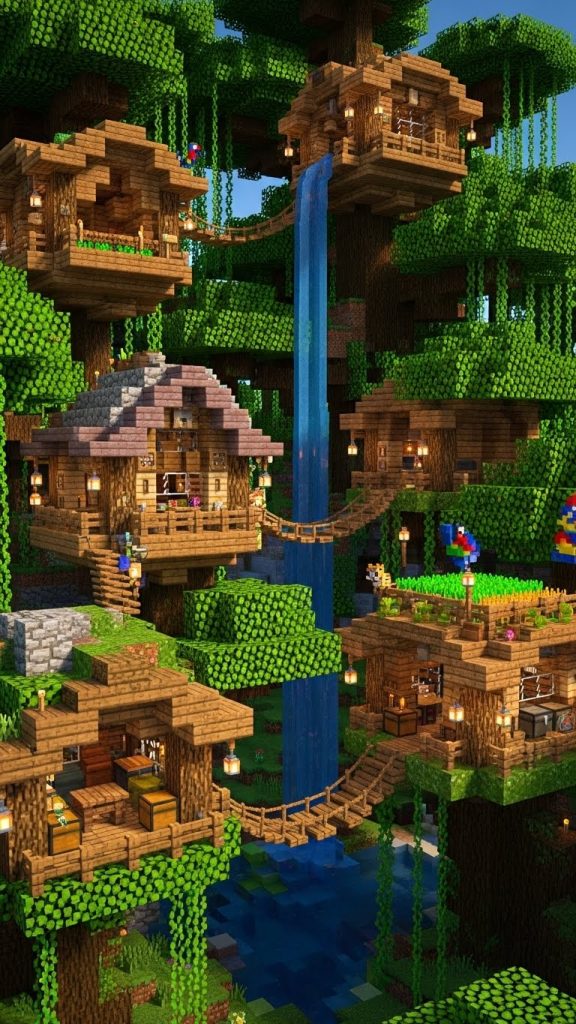
Instead of one house, this idea creates a small village of tree houses connected by wooden paths and bridges.
Each structure serves a purpose: storage huts, sleeping quarters, lookout towers, and communal areas. The village feels organic, growing naturally among the trees.
Lanterns line the paths, guiding you safely at night. Vines and leaves soften edges, preventing the build from looking too rigid or artificial.
This concept is perfect for multiplayer survival or long-term solo worlds where storytelling and expansion matter.
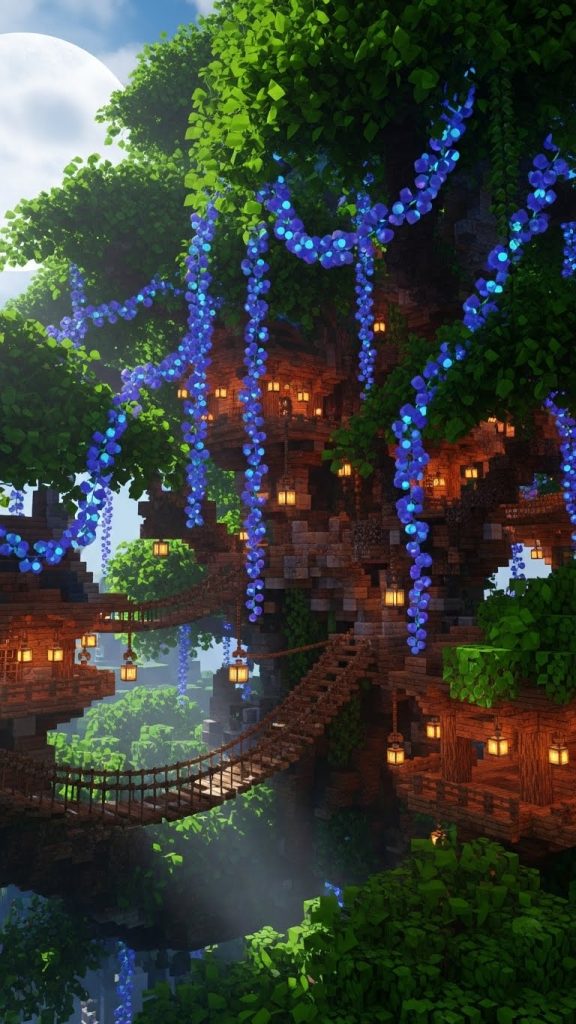
10. Enchanted Jungle Tree House with Glow Details
This final idea adds a magical twist. Using glow berries, lanterns, and subtle lighting, the tree house feels enchanted—especially at night.
The structure glows softly through the leaves, creating a dreamlike atmosphere without being overly bright. Mossy blocks, azalea leaves, and water features enhance the fantasy feel.
This build is ideal for players who love cinematic visuals and cozy nighttime environments. It feels like a hidden sanctuary deep in a mystical jungle.